The Defence of Khujand, 1922
24th September 2026, 0 Comments
The Back of Beyond, The Men Who Would be Kings, 28mm
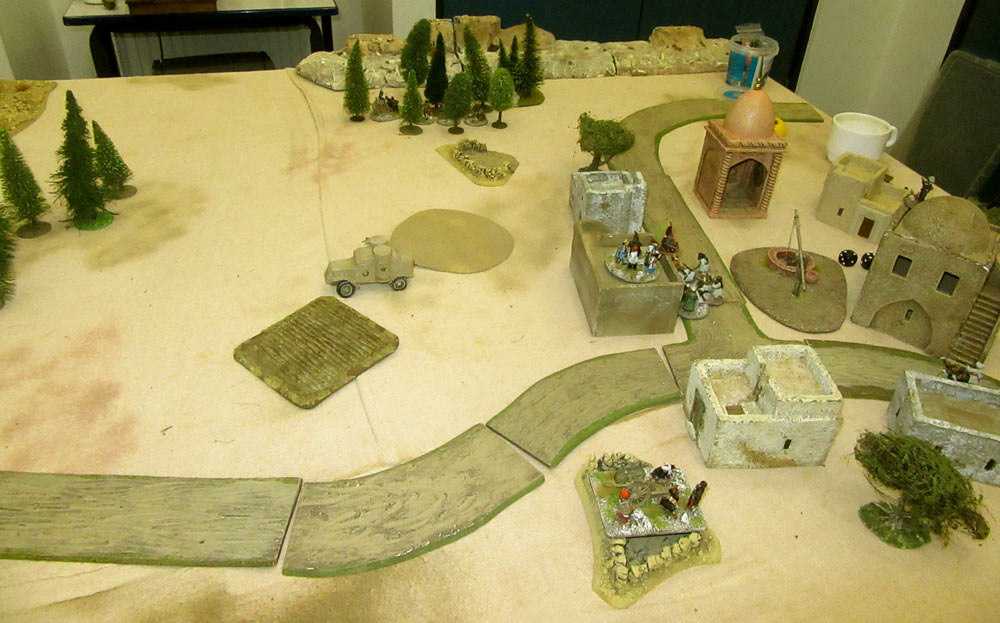
I was horrified to discover we hadn’t played a ‘Back of Beyond’ game in over a year and a half! So, we had to remedy that. This week then, we’re off to Turkistan (it’s always seems to be in one of the ‘stans’), where the Basmachi Rebellion is well under way. In this game, the Basmachis were defending the town of Khujand, the entrance to the Fergana Valley, against a column of well-armed Soviet troops led by General Kukurin.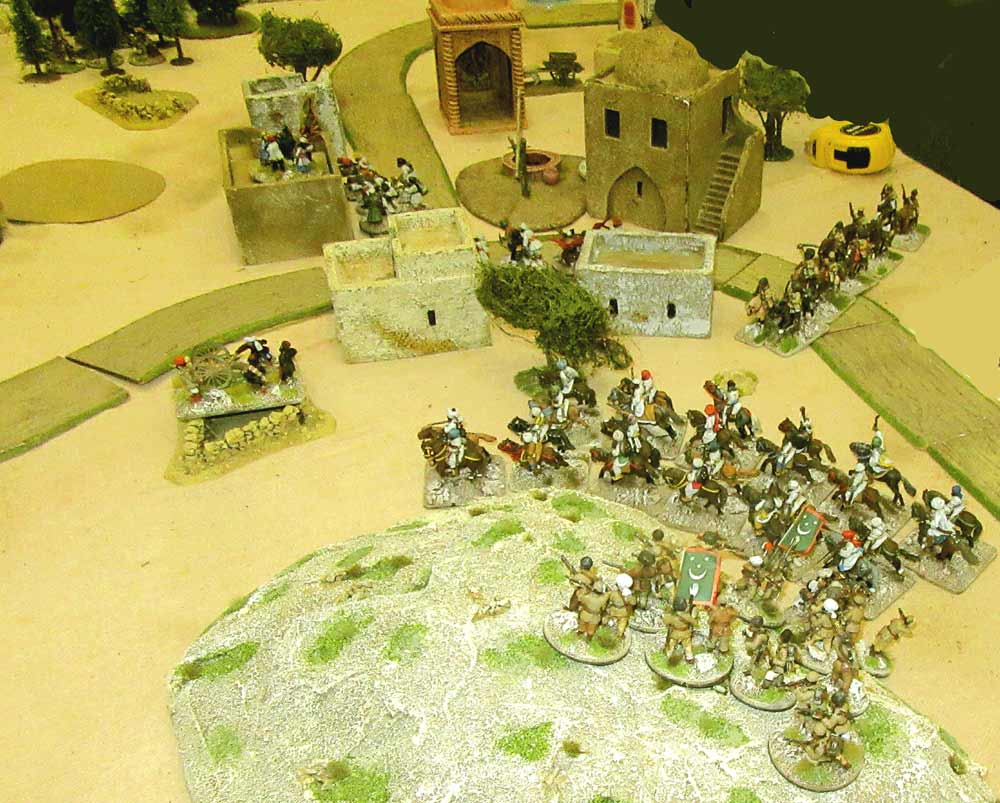 In this game, Chris played the part of a Basmachi leader, Selim Pasha, while Nick, as the Soviet general, led the troops of the Tashkent Soviet, with some help from me. Khujand lay at the western entrance to the valley, so Kukurin planned to capture it, with the help of troops, tanks, and aircraft!
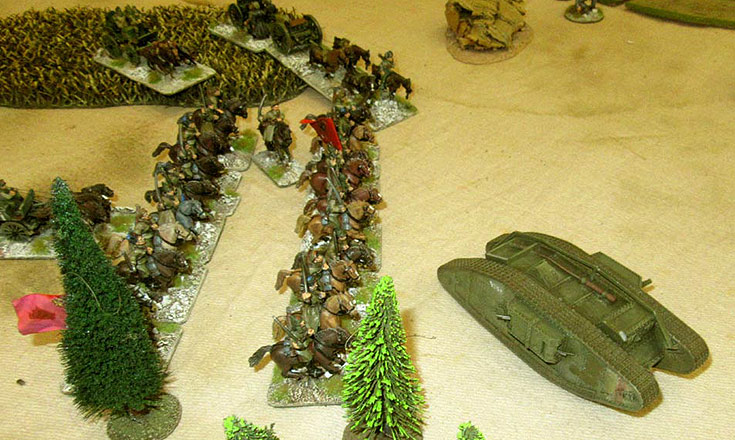
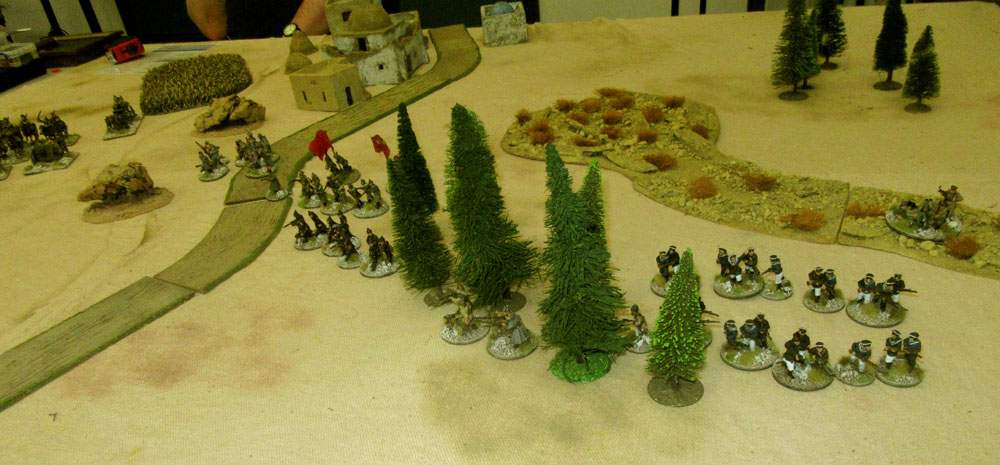
 The Tashkent Soviets had two 12-figure units of Black Sea Fleet sailors, one of black-coated Cheka, two of Red army conscripts, another of ex-Austrian POWs, two 10-figure units of Red Cossacks, two machine gun teams, a field gun team, a British-built Mark IV tank and some air support.
 The defending Basmachi force was a mixture of ex-Bokharan army regulars and local Fergana irregulars. There was a 10-fig Bokharan cavalry unit and two 12-fig Feranga ones, two 12-fig. units of Basmachi irregulars, and two of Bokaran regulars, plus two field guns and a captured armoured car.
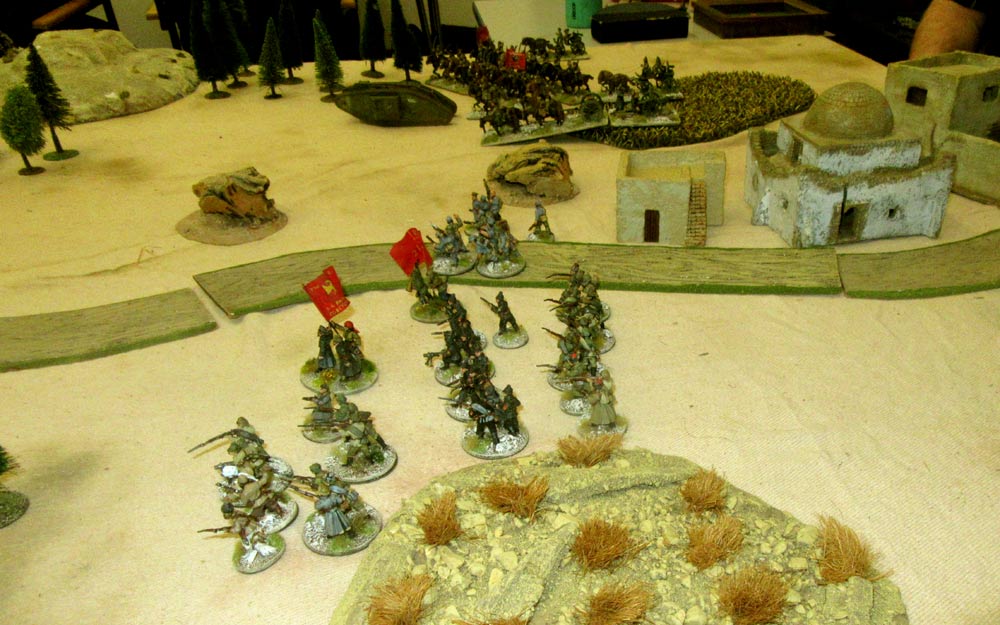 The attack began with a Soviet advance towards the town, with the guns of both sides dueling with each other. The Basmachi armoured car did well at first, but eventually got knocked out. The attackers weren’t having it their own way, though, as the Red army infantry were taking casualties.
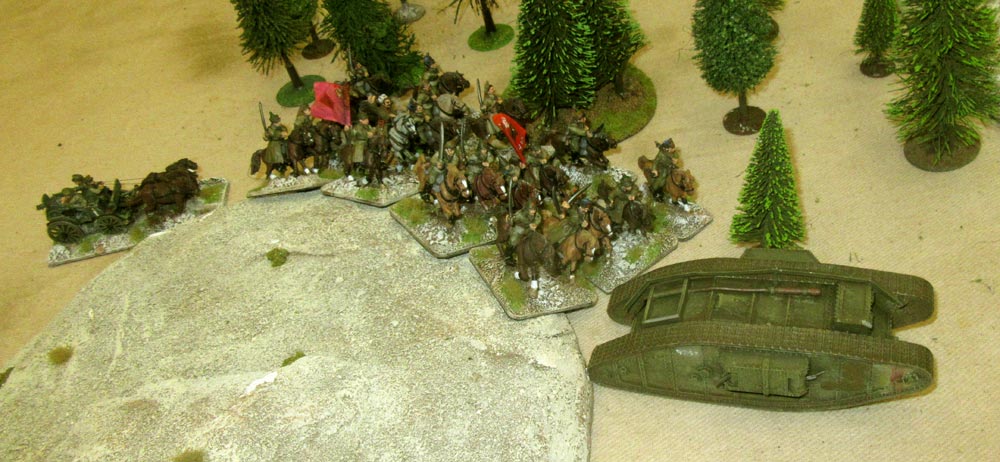 On the Soviet right, though, a ‘flying column’ of cavalry and tanks took a path that kept them out of the defenders’ fire, and made slow but steady progress. It soon became clear, though, that the poor morale of the Soviet troops was a problem, as units seemed increasingly reluctant to advance.
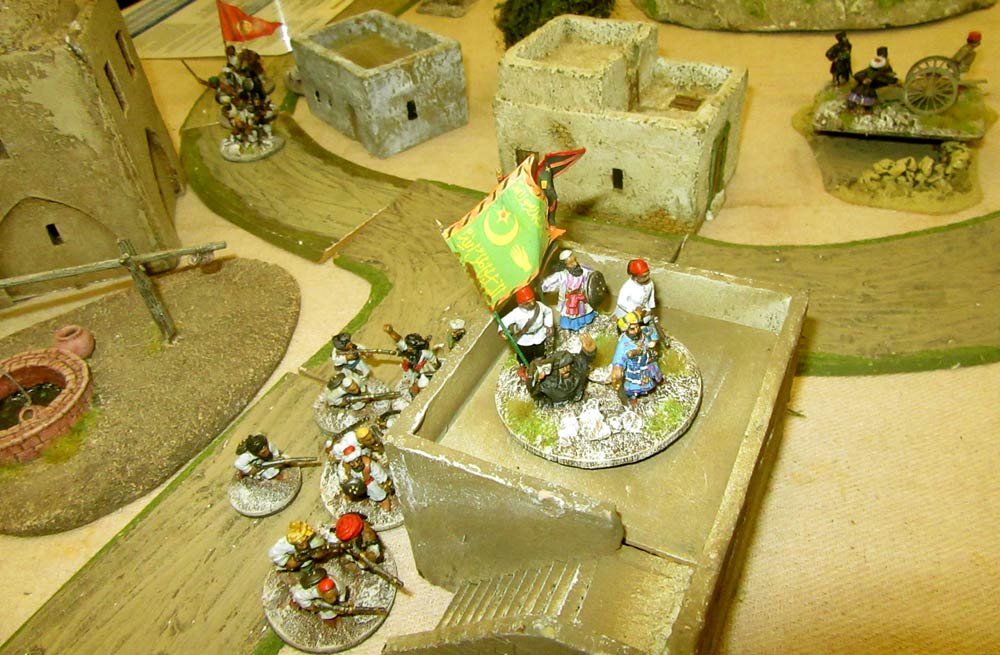 As for the Bokharans, they won the gun duel, and wiped out a Soviet gun, which helped make up for the loss of the armoured car. The bulk of their infantry and cavalry, though, hadn’t been involved in the fight. Instead, they were waiting for the enemy to come to them in the town.
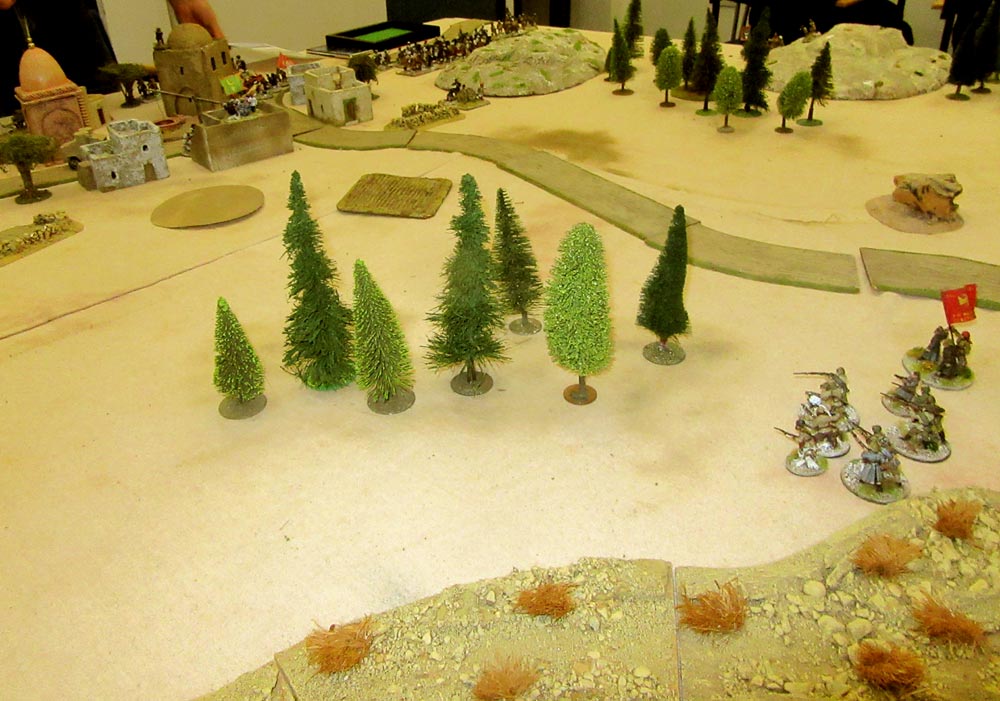
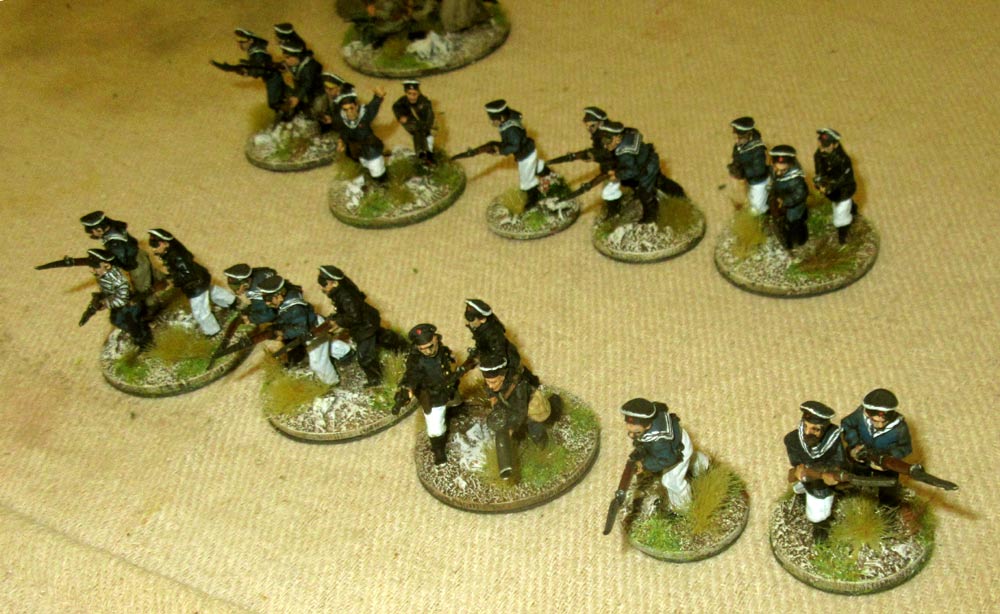
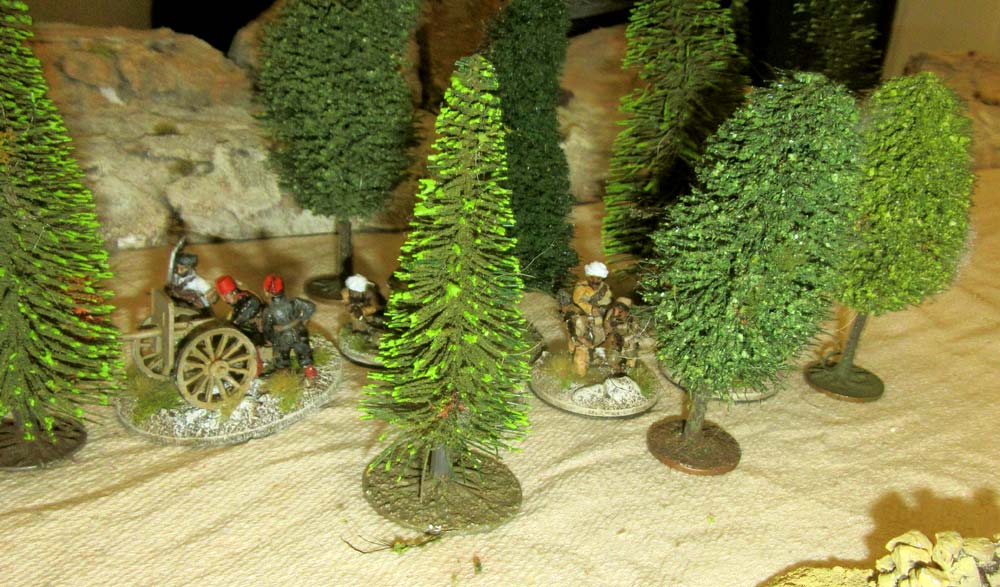 The exception to the Soviet malaise – a failure to ‘activate’ – were the sailors who crossed a dried up wadi, ther took fire from the Basmachis in a nearby wood. Helped by their LMGs, the speedily wiped out a Basmachi gun (above), and drove the supporting Bokharans back to the town.
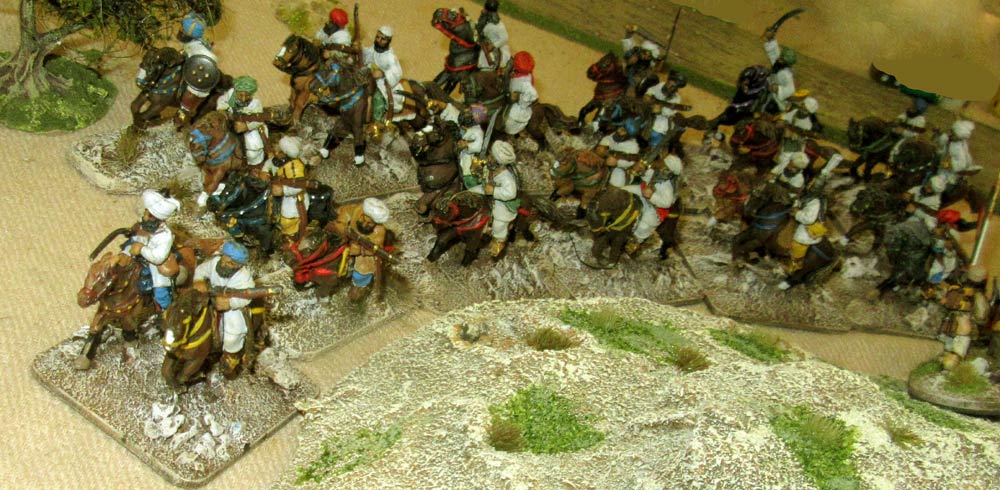
 By then the Basmachi cavalry were massing at the end of the road leading into the town. This posed a real threat to the attackers, especially as they had the Bokharan regulars backing them up, along with the Bokharan field gun. The Soviet infantry in the road leading into town refused to move closer.
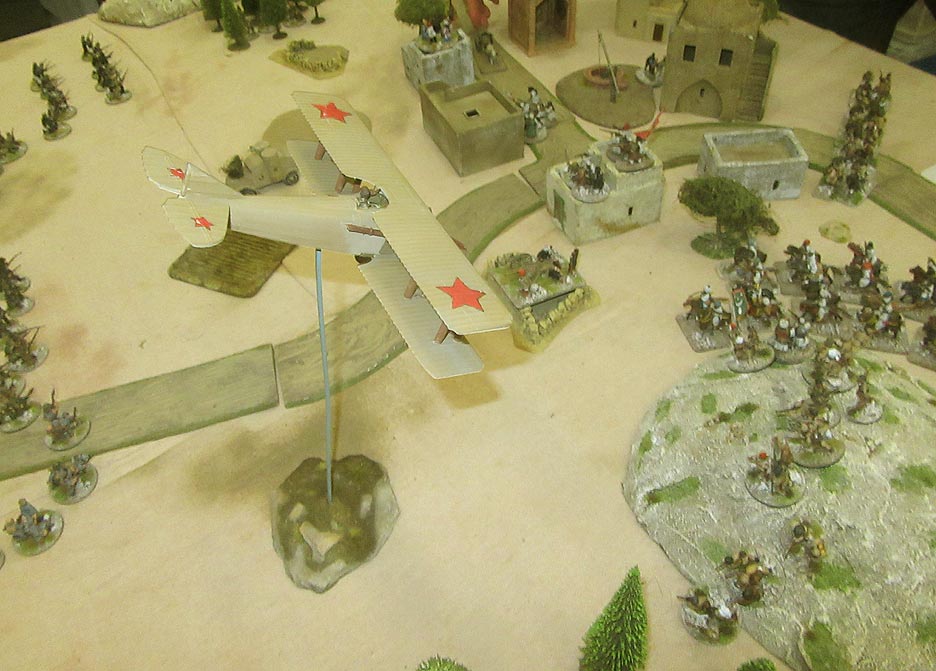
 Fortunately for the Comrade General, the Soviet air force turned up, and a former American SPAD strafed them. The Basmachi horse as well as the Bokharan regulars hastily pulled back behind the town. So, the exciting prospect of a massed cavalry charge slipped away.
 In theory the attackers were making headway – or at least the’d started whittling down the defenders. However, the reluctance to advance had now stalled the ‘flying column’ too. It was clear that the Tashkent Soviet troops weren’t into it. So, reluctantly, the Comrade General called off the assault. He’d try again soon, with better troops, and probably with more air support! So, sleepy Khujand was left in peace – at least for now!